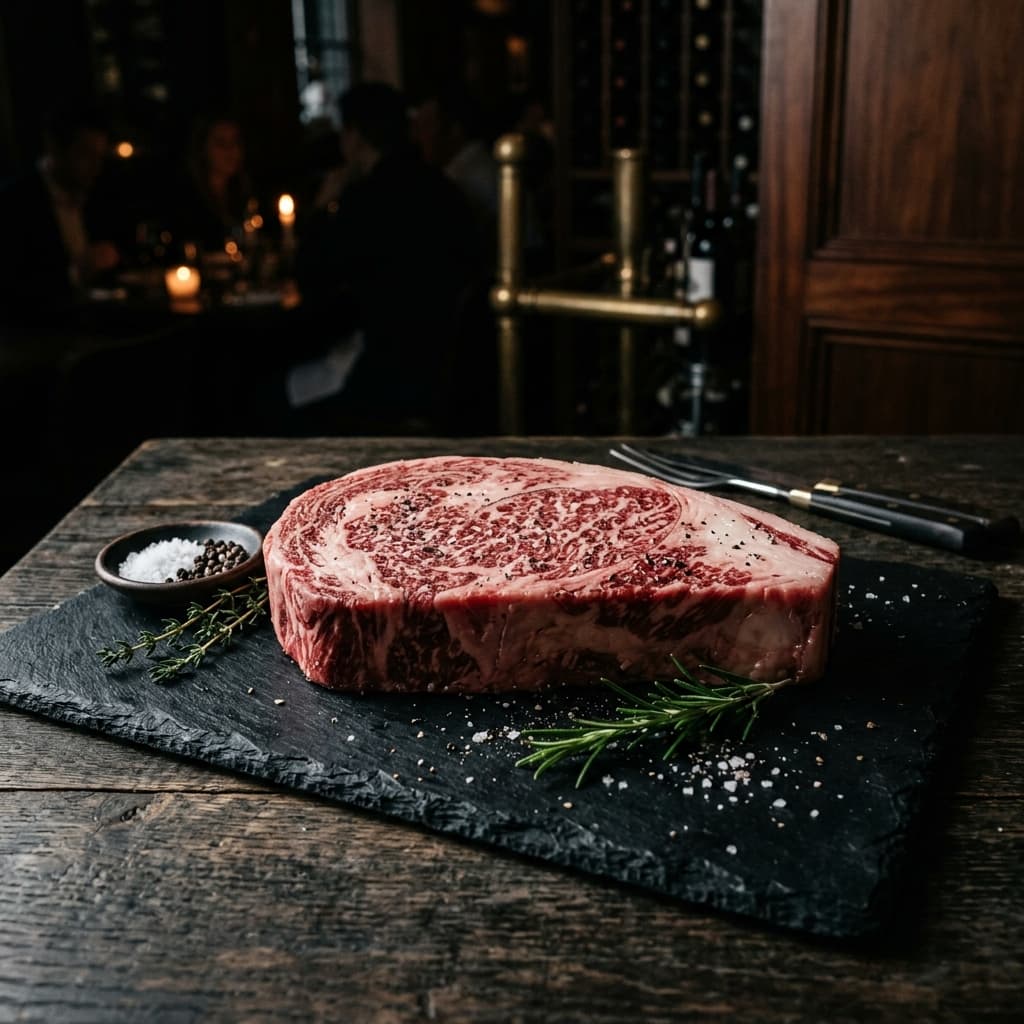
Australian beef grading is one of the most advanced and science-driven systems in the world. It is primarily governed by Meat Standards Australia (MSA), a program developed by Meat & Livestock Australia to predict eating quality based on consumer outcomes rather than just carcass traits.
1. Overview of the Australian Grading System
Unlike traditional grading systems that focus mainly on carcass appearance (e.g., marbling or yield), the Australian system:
- Predicts eating quality (tenderness, juiciness, flavor)
- Uses scientific modeling + consumer testing
- Grades individual cuts, not just the whole carcass
- Accounts for cooking method
There are two main grading frameworks:
| System | Purpose |
|---|---|
| AUS-MEAT | Objective carcass classification |
| MSA | Consumer eating quality grading |
2. AUS-MEAT Grading (Carcass Classification)
The AUS-MEAT system evaluates physical carcass traits.
Key Measurements
- Carcass weight
- Fat depth
- Muscle score
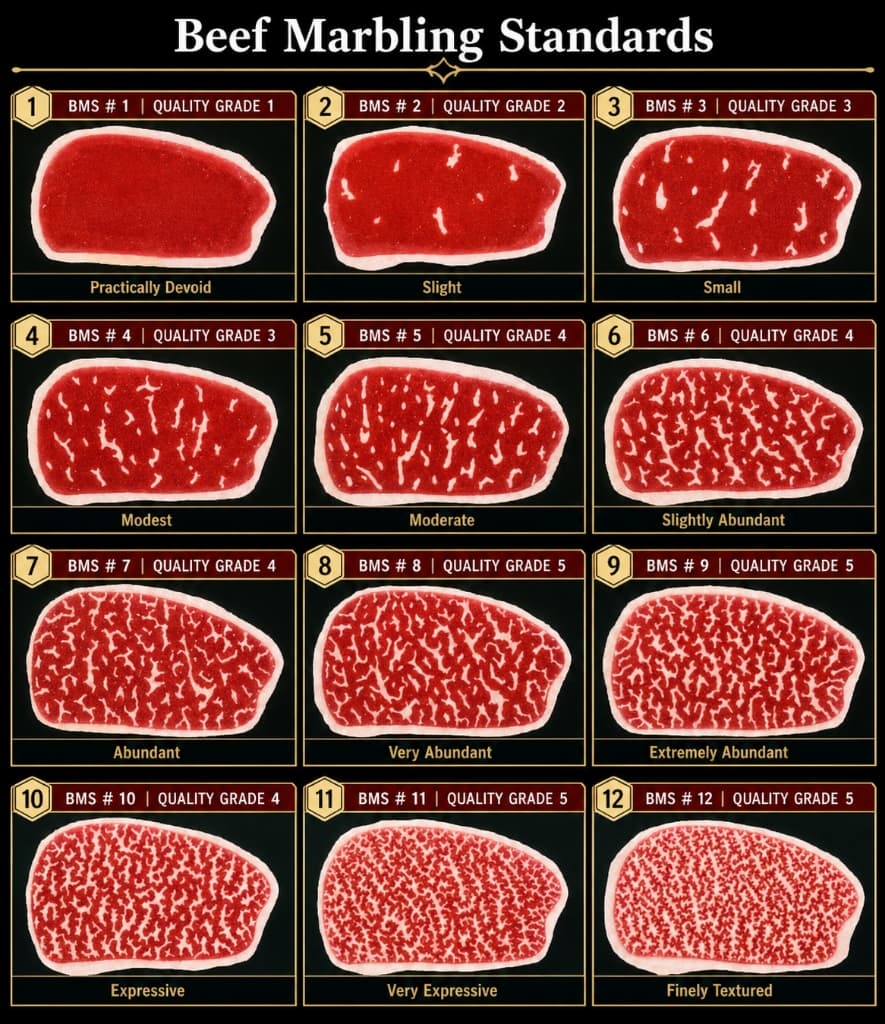
- Marbling score (0–9+)
- Meat color
- Fat color
- Ossification (age indicator)
Example Marbling Scale
Marbling Score (AUS-MEAT)
3. MSA Grading (Eating Quality System)
The MSA system predicts eating quality using over 100,000+ consumer taste tests.
Factors Considered
Animal Factors
- Breed (Bos indicus vs Bos taurus)
- Hormone Growth Promotants (HGP)
- Age (ossification score)
Processing Factors
- pH decline
- Carcass hanging method
- Aging time
Cut & Cooking
- Cut type
- Cooking method (grill, roast, stir-fry)
4. MSA Grading Outcomes
Instead of grading the whole carcass, MSA grades each cut for specific cooking methods.
MSA Eating Quality Grades
5. MSA Index (Overall Carcass Score)
The MSA Index provides a single numerical score representing the overall eating quality potential.
Typical Range
6. Grading Flow Process
Simplified Workflow
7. Key Scientific Concepts
Ossification (Physiological Age)
Higher ossification = older animal = potentially tougher meat
Ultimate pH
Indicates stress before slaughter.
Hanging Method Impact
8. Comparison: MSA vs Traditional Systems
| Feature | MSA (Australia) | USDA (USA) |
|---|---|---|
| Focus | Eating quality | Marbling/yield |
| Cut-specific grading | Yes | No |
| Consumer tested | Yes | Limited |
| Cooking method | Included | Not included |
| Predictive modeling | Advanced | Minimal |
9. Wagyu and High-End Beef in Australia
Australia is one of the largest producers of Wagyu outside Japan.
Typical Wagyu Characteristics
- Marbling Score: 6–9+
- MSA Index: 65–80+
- Flavor: Rich, buttery
- Texture: Extremely tender
Wagyu cattle often dominate premium MSA grades due to superior marbling and genetics.
10. Strengths of the Australian System
- ✓ Consumer-focused grading
- ✓ Scientifically validated
- ✓ Highly consistent eating experience
- ✓ Adaptable to global markets
- ✓ Works across breeds and production systems
11. Limitations
- × More complex than traditional systems
- × Requires detailed data collection
- × Dependent on accurate processing inputs
- × Less intuitive for consumers unfamiliar with MSA
12. Industry Impact
The MSA system has:
13. Example: Cut-Based Grading Output
This demonstrates how the same animal produces different grades depending on the cut and cooking method.
14. Summary
"Australian beef grading stands out globally because it shifts focus from appearance to eating experience. Through the integration of science, consumer feedback, and predictive modeling, the MSA system delivers one of the most reliable beef quality frameworks in the world."